Why Romance?
Who reads it?
If you're an enthusiast, or even a general reader with a fair mind, you probably know the ball park, even if you haven't got a handle on the statistics. So here they are, well some of them.
Romance in the USA, where the statistics are the most readily available, was in 1999
In the UK
- In 2007, British consumers bought 24m romantic books, worth £118m
- 5.6m people bought romantic fiction, as against 4.7mn who bought crime/mystery and 4.5mn who bought adventure/thriller
- Readers of romantic books are also heavier buyers of books than adult fiction buyers in general. They read more and borrow more from libraries
Source: Research by Book Marketing Ltd for the Romantic Novelists' Association, Romance Matters Spring 2009 http://www.rna-uk.org/
In the US
- Romance is the largest category in terms of sales, second largest in terms of the best seller lists in 2008
- 24.6% of Americans read a romance novel in 2008
Source: Romance Writers of America http://www.rwanational.org
All right, I hear you say, so it's BIG. That doesn't mean it's good. The reverse, in fact. Anyone want to mention lowest common denominators?
OK OK OK The idea that anything popular has to be meretricious has been set into our appreciation of culture for a long time.
I even sympathise with the principle a bit. Most sensible people are scared of mobs. (Though some can take it a bit far: 'you blocks, you stones, you worse than senseless things...') But actually that is not what is going on here. A readership cannot be a mob. A mob is a public thing, swung this way and that instantly without taking time to reflect. A readership, by contrast, is the sum of a lot of individuals. They buy (or borrow) their books, take them home, read them in their own time at their own pace. And then those individuals think, criticise, recommend, buy the next one by that author - or not. This is not a knee jerk reaction without reflection. This is choice. This is, in effect, everyone getting a vote.
And nobody talks about the highest common denominator. You could make as good a case for that.
Ah but, say the detractors, the sales figures are skewed because individual romance readers buy so much. They are addicts. (A Romantic Times article once said that some of them buy forty books a month.)
Well back to RWA again. A quarter of the population read a romance in 2008. One in four. That's not a tiny group. That's not a secret society of addicts. That's people you know.
Romance as Tosh
So what we have is a perfectly normal genre - it has been around for centuries - read by a lot of perfectly normal people. And what happens? It is derided, even reviled, as a matter of course.
Say you read it with pleasure and interest - worse, say you write it - and people shuffle nervously and change the subject. Or refuse to believe you. Or berate you. Or readjust their expression, to a slightly hectic seriousness as if you’ve just told them you’ve got a terminal illness, and then ask you Something Tactful. There’s a Bateman cartoon in there somewhere.
WHY?
Well, to be fair, some of it is down to a few - a very few - high profile romantic authors of the past. Barbara Cartland, a courageous, hard working and shrewd woman, cultivated a brand image (pink, bling, and precepts on sexual conduct straight out of the nineteenth century upper class) which was verging on the ludicrous. The media loved it, of course, and ten years after her death she is still seen as the Romantic Novelist Archetype.
In the nineteenth century Cartland was preceded by a couple of prize fruit loops - Ouida (Under Two Flags made into one of Rudolf Valentino’s most successful films) who thought she could influence foreign policy by her irresistible charm; and Marie Corelli (A Romance of Two Worlds) who believed in astral projection and engaged a Venetian gondolier (and boat) to punt her along the Avon at Stratford-on-Avon, Warwickshire. Both were highly emotional, egotistical and thought they were geniuses. Their books were lively, highly coloured and occasionally touched on issues of female rights and aspirations. They were both hugely popular in their time. But one can’t deny the tendency to barminess.
But that is three.
Compare them with the good sense and manifest sanity of today’s best selling romantic authors - Nora Roberts, Debbie Macomber, Jennifer Crusie, Katie Fforde, Carol Matthews, Liz Fielding and a host of others. Dottiness is not an inseparable accidence of writing romantic fiction.
Nor is there anything wrong with the subject matter. Love in all its forms has been inspiring high and low literature for as long as there are records and probably before that. The twenty first century had not made the mating dance obsolete, rather the reverse; and added a few added problems of its own.
A person goes through three major gates in life:
- Birth - sorry, nothing you can do about it, it’s down to your parents and a bunch of medicos.
- Death - you’ve got a bit more chance of affecting that, but most people don’t take it.
- Finding a mate - at last! The one where you get to choose. Well, you get a vote, anyway.
But the trouble with getting to choose, is you might choose badly. It could spoil your whole life and you know it - and if you do, it will be your own fault. This is one of the highest risk things you will ever do. Risk is a proper subject for fiction, right?
The twenty-first century hero and heroine have more opportunities, more choices, more freedom than ever before - and it just seems to make finding a mate more difficult. In the west we are seeing multiple divorces and increasing numbers of single person households. There is an intrinsic battle between the instinct that draws us towards intimacy and the consciousness of self that says it could cost us our self respect, our freedom of action and possibly a good slug of our bank balance. How does today’s lover negotiate career and child care, too? For, in spite of accusations to the contrary, romantic fiction is not locked in patriarchal reinforcement; the heroine has a career and personal growth strategy which she has to finesse around those old, uncomfortable instincts. Oh, and sex is a pretty hot topic, too: when there are no conventions any more, how do you navigate through someone else’s most private expectations? How do you express your own? Especially when you love the other person to bits and they make you dribble with lust. All good meaty story material, there.
So the genre can’t really be criticized for daft authors; or for daft subject matter. Could it just be fashion, then?
When the Romantic Novelists’ Association was founded in 1960, the first Chairman, Harlequin Mills & Boon author Alex Stuart, wrote in a letter to The Woman Journalist (magazine of the Society of Women Writers and Journalists):
One of the basic aims of the newly-formed Romantic Novelists’ Association is to work for increased and more serious reviews of our published work.
When considering this question, I delved into the past in search of enlightenment and discovered that Maud Diver, for example was enthusiastically reviewed in The Times Literary Supplement, The Sunday Times and The Scotsman as recently as 1938. I also found earlier, and most respectfully glowing reports in the Observer, Telegraph and National Review, and a friend has just written to tell me that she found similar reviews of Mills & Boon and Hurst & Blackett novels in bound volumes of Punch published in 1921.
Alex Stuart didn’t get it then and we haven’t got it now. But it was not always so. Let us hope that fashions change again. Romantic novels books have certainly kept pace with social change, even if the literary editors haven’t.
What the Authors Say
We can have a toot about it. I had mine in the UK Romantic Novelists Association News Letter.
Canadian author Robertson Davies (a class act by anybody's standards: The Deptford Trilogy has to be one of the great literary achievements of the last century ) made several profound points, quoted in the recently published For Your Eyes Alone; the Letters of Robertson Davies, edited by Judith Skelton Grant, Viking Press.
'I do not think that it makes the least difference that the Harlequin books are undistinguished from a literary point of view. People who like narrative need not have an exacting literary taste any more than people who like music need have a highly trained or sophisticated musical one. It is half-baked intellectualism which insists that nothing is satisfying in the theatre or in narrative or in music which is not of the currently fashionable top class. [...] It is dangerous to condemn stories as junk which satisfy the deep hunger of millions of people. These books are not literary art, but a great deal of what is acclaimed as literary art in our time offers no comfort or fulfillment to anybody.'
I'm not sure how many of Davies' ideas I go along with to the end of the road. But I whole heartedly sign up to two at least: that what is perceived as 'top class' is not only highly subjective but highly subject to fashion; and that romantic fiction satisfies the deep hunger of millions. (See those RNA statistics!)
Whether all, some or any category romances can be said to pretend to literary art is more debatable, I think. (First define literary, I suppose; then art.) I'm still pondering.
I suspect that 'literary fiction' is in practice simply another genre, with its own recognisable conventions, conceits and shibboleths. What is interesting is that it is romantic fiction which has been demonised as its evil and worthless swan sister. Science fiction, crime, mystery and horror are all allowed a toe hold in the same universe. But romance is literary fiction's anti matter.
Really the only way to turn this on its head is to look seriously at romantic novels we have enjoyed and try to see what it is that they deliver, how we receive it and why we went looking for it in the first place.
There are some very serious people who are romantic authors who already do this. I commend to you the following sites. I shall try to bear my part in the ongoing debate too. Always trying not to forget that romance is supposed to be fun, of course.
http://www.krentz-quick.com/ A giant of the genre. Writes contemporary and historical with equal success. Has also co-authored the seminal Dangerous Men and Adventurous Women University of Pennsylvania Press 1993. Site content includes reflections on the romance genre.
http://www.jennycrusie.com/ An ex Harlequin author who has made it into the mainstream, with comedy romance in small town America. Her critical writings are as stimulating (if not quite as funny) as her novels.
http://wwwmcc.murdoch.edu.au/ReadingRoom/4.1/Felski.html Thoughts of an academic rather than a romance author, this paper was published in the Australian Journal of Media and Culture Volume 4 No 1. Stimulating stuff about kitsch and sentimentality. Touches on characters from literature who have trouble unpacking fantasy from reality, including Emma Bovary and Stephen King's terrifying Annie Wilkes from 'Misery'.
And finally, a Few Quotes
Mary Burchell
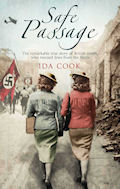
Opera loving author of more than 100 Harlequin Mills & Boon category romances, who helped smuggle Jews out of Germany from 1934 (Safe Passage by Ida Cook, Mira 2008), founder member and long term President of the Romantic Novelists' Association.
'A good romantic novel is a heart-warming thing which strikes a responsive chord in those who are happy and offers a certain lifting of the spirits to those who are not.'
Elizabeth Goudge
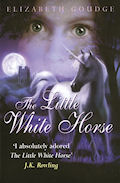
Much loved Carnegie-medal winning author of fantasy and romantic fiction for children and adults, notably the perennial The Little White Horse and Green Dolphin Country.
'As this world becomes increasingly ugly, callous and materialistic it needs to be reminded that the old fairy stories are rooted in truth, that imagination is of value, that happy endings do, in fact, occur, and that the blue spring mist that makes an ugly street look beautiful is just as real a thing as the street itself.'
Katie Fforde
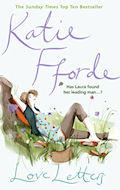
Author of deliciously warm and witty best sellers, Love Letters being the latest to hit the top spot; Chairman of the RNA in its 50th Anniversary year.
'Romantic fiction is more recession proof than other genres... People want comfort, fun and romance in these hard times.'
Yup.